

Electric vehicle charging infrastructure & charging network
·Ontario-based. Canada-ready.
Charge faster. Go further. Build smarter.
Commercial EV Charging • DC Fast Charging • Highway Charging • Truck & Bus Charging • Fleet Charging • Residential Charging • Charging Infrastructure Development
RAPIDCHARGER CANADA is an Ontario-based EV charging infrastructure
company and a new venture under ITBD Group.
01. RAPIDCHARGER
Infrastructure shaped around the project.
Our primary focus is the development of commercial, public and high-power EV charging projects in Ontario, with a long-term objective of participating in charging infrastructure development across Canada.
We work with property owners, developers, businesses, fleet operators, investors and other project partners to evaluate charging opportunities and coordinate the technology, engineering, construction and service providers required for a potential project.
RAPIDCHARGER is not a charger manufacturer. Charging equipment may be sourced from qualified manufacturers, while engineering, electrical, civil construction, networking, payment, maintenance and other specialized work may be provided by appropriately qualified third parties, depending on the project.
OUR CORE FOCUS
- Commercial EV Charging
- DC Fast & High-Power Charging
- Highway & Public Charging
- Fleet, Truck & Bus Charging
- Site & Project Development
- Charging Technology Coordination
- Site Host & Investor Partnerships
- Residential Charging
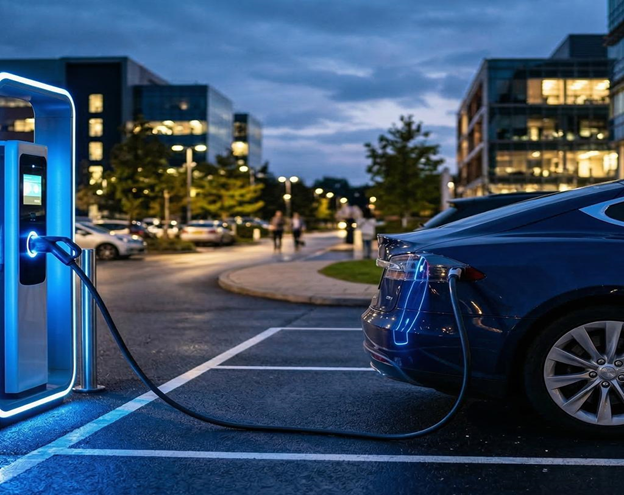
A PROJECT-FIRST
APPROACH
- SITE
- POWER
- TECHNOLOGY
- ENGINEERING
- DEVELOPMENT
- CHARGING
We begin with the project requirements rather than assuming that one charger, one configuration or one business model fits every location.
02 — COMMERCIAL EV CHARGING
EV CHARGING WHERE BUSINESS HAPPENS
Commercial properties are becoming important locations for EV charging.
RAPIDCHARGER works with property owners, businesses and developers to evaluate charging opportunities that may complement existing commercial activity.
The appropriate solution depends on the property, parking patterns, electrical infrastructure, expected demand and intended use.
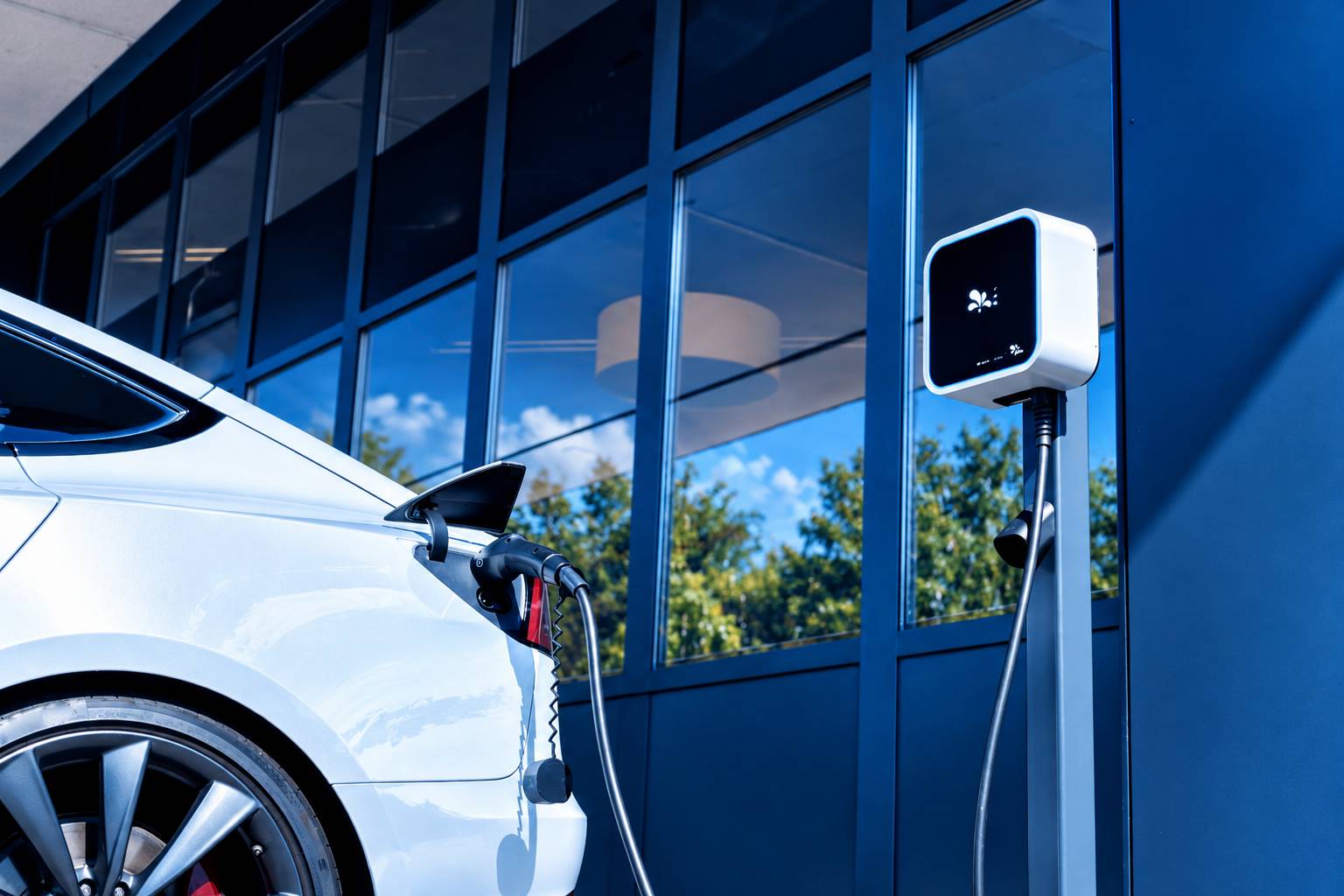
COMMERCIAL LOCATIONS
Potential applications include:
SHOPPING PLAZAS & RETAIL
Charging can give EV drivers another reason to spend time at a commercial property.
HOTELS
EV charging may be incorporated as an additional guest amenity.
RESTAURANTS & DESTINATIONS
Charging can complement locations where customers already spend time.
OFFICE & MIXED-USE PROPERTIES
Charging may support employees, tenants, visitors and company vehicles.
GYMS & ENTERTAINMENT
Longer parking periods can make certain properties suitable for Level 2 charging.
AUTOMOTIVE & EV-RELATED BUSINESSES
Charging infrastructure may support customers, inventory and business operations.
LEVEL 2 OR DC FAST?
The right technology depends on how the property is used.
LEVEL 2
Generally suited to locations where vehicles remain parked for longer periods.
Potential applications:
- Offices
- Hotels
- Condominiums
- Restaurants
- Retail
- Workplaces
- Multi-residential properties
DC FAST
Designed for locations where shorter charging times may be more important.
Potential applications:
- Highway-adjacent properties
- Shopping plazas
- High-traffic commercial locations
- Travel destinations
- Public charging hubs
- Fleet facilities
WHAT WE REVIEW
Before a project is considered for development, relevant factors may include:
- Location and accessibility
- Parking availability
- Traffic patterns
- Existing and potential EV demand
- Electrical service
- Utility requirements
- Charger configuration
- Construction requirements
- Property terms
- Operating considerations
- Expansion potential
- Project economics
HAVE A COMMERCIAL PROPERTY?
Could your property support EV charging?
Tell us about the location and we can determine whether it may be suitable for further evaluation.
3 — DC FAST & HIGH-POWER CHARGING
HIGH-POWER CHARGING FOR HIGH-DEMAND LOCATIONS
When charging time matters, DC fast charging can provide substantially higher charging power than conventional Level 2 systems.
RAPIDCHARGER is developing opportunities involving 240 kW and higher-power charging configurations, with potential equipment options that may include approximately 300 kW, 350 kW, 360 kW and 400 kW+ systems, subject to equipment specifications, vehicle capability and site infrastructure.
The rated power of a charger does not mean every vehicle will receive that power.
Actual charging performance can vary according to:
- Vehicle capability
- Battery condition
- State of charge
- Charger configuration
- Number of vehicles charging
- Available electrical capacity
- Temperature and operating conditions
- Site infrastructure
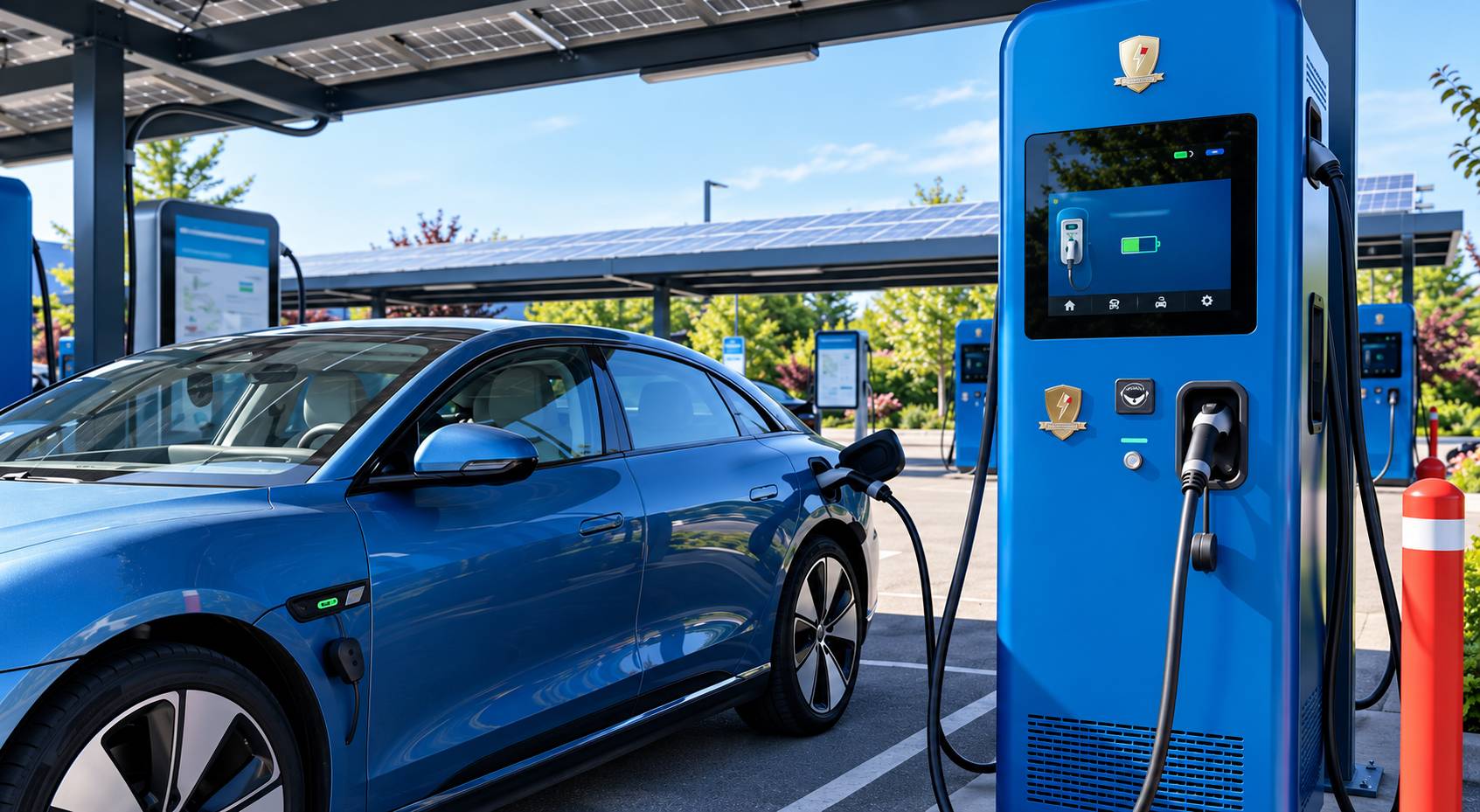
DYNAMIC POWER MANAGEMENT
For multi-port charging sites, the electrical capacity may be distributed among vehicles rather than requiring maximum rated output at every port simultaneously.
Depending on the selected equipment and project design, power-management technologies may support:
- Dynamic power sharing
- Load management
- Power allocation
- Peak-demand management
- Electrical-capacity optimization
The final configuration is determined by the electrical design and project requirements.
A HIGH-POWER STATION IS MORE THAN THE CHARGER
A commercial DC fast charging project may involve:
01
PROPERTY
Suitable land, parking and vehicle access.
02
UTILITY
Electrical service, available capacity and potential upgrades.
03
ELECTRICAL INFRASTRUCTURE
Transformer, switchgear, distribution and protection equipment where required.
04
CIVIL WORK
Foundations, trenching, conduit, paving, drainage and site preparation as applicable.
05
CHARGING EQUIPMENT
Appropriately selected DC charging equipment and dispensers.
06
ENGINEERING
Project-specific electrical, civil and other professional engineering requirements.
07
NETWORK & PAYMENT
Third-party technology and transaction services where applicable.
08
APPROVALS
Applicable permits, inspections and regulatory requirements.
09
SERVICE
Maintenance, warranty and technical support arrangements appropriate to the selected equipment and providers.
TECHNOLOGY CONSIDERATIONS
Depending on the project, equipment evaluation may include:
RAPIDCHARGER does not manufacture charging equipment. Equipment selection is project-specific and may involve qualified third-party manufacturers.
4 — HIGHWAY & PUBLIC CHARGING
CONNECTING EV DRIVERS TO THE PLACES THEY TRAVEL
Long-distance EV travel depends on appropriately located charging infrastructure.
RAPIDCHARGER is evaluating potential public and highway-adjacent charging opportunities in Ontario as part of its long-term infrastructure development strategy.
The objective is to identify locations where charging infrastructure may align with transportation patterns, commercial activity, available power and future EV demand.
WHAT MAKES A LOCATION INTERESTING?
We may consider:
- Highway or major-road access
- Traffic volume
- Convenient vehicle entry and exit
- Adequate parking
- Nearby amenities
- Electrical availability
- Potential charging demand
- Property control
- Site layout
- Future expansion opportunities
No location is assumed to be suitable before the relevant technical, property and commercial factors are reviewed.
A MORE PRACTICAL DESTINATION WHILE CHARGING
A charging location can be complemented by the surrounding property.
Potential amenities include:
- Restaurants
- Coffee shops
- Retail
- Convenience stores
- Hotels
- Washrooms
- Shopping
- Other customer services
This can create a more practical destination for drivers while a vehicle is charging.
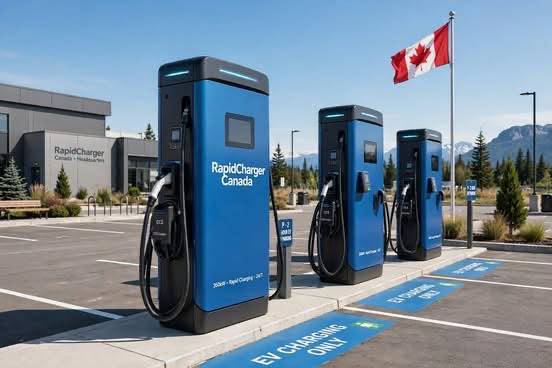
FROM PROPERTY TO PUBLIC CHARGING LOCATION
01
LOCATION
Identify a property with appropriate transportation access.
02
SITE REVIEW
Examine parking, access, layout and potential demand.
03
POWER
Determine available electrical service and potential utility requirements.
04
PROJECT DESIGN
Develop an appropriate charging concept for the location.
05
PROFESSIONAL SERVICES
Coordinate with applicable engineering, electrical, civil and other qualified providers.
06
DEVELOPMENT
Proceed only when the required commercial, technical, property and regulatory conditions are sufficiently established.
07
COMMISSIONING
Testing and commissioning are performed by the appropriate project professionals and service providers.
08
OPERATING ARRANGEMENT
Network, payment, maintenance and other ongoing services are established according to the final project structure.
ONTARIO TODAY.
CANADA TOMORROW.
RAPIDCHARGER is building its initial business in Ontario with a longer-term objective of participating in the development of strategically located charging infrastructure across Canada.
Ontario today. Canada tomorrow.
HAVE A HIGHWAY-ADJACENT PROPERTY?
Your location may have potential for charging infrastructure.
CHARGING DESIGNED AROUND COMMERCIAL TRANSPORTATION
Fleet electrification requires a different approach from passenger-vehicle charging.
Charging infrastructure needs to reflect vehicle schedules, routes, dwell periods,
operating requirements and available electrical capacity.
RAPIDCHARGER works with fleet operators and project partners to evaluate potential
charging infrastructure for commercial transportation applications.
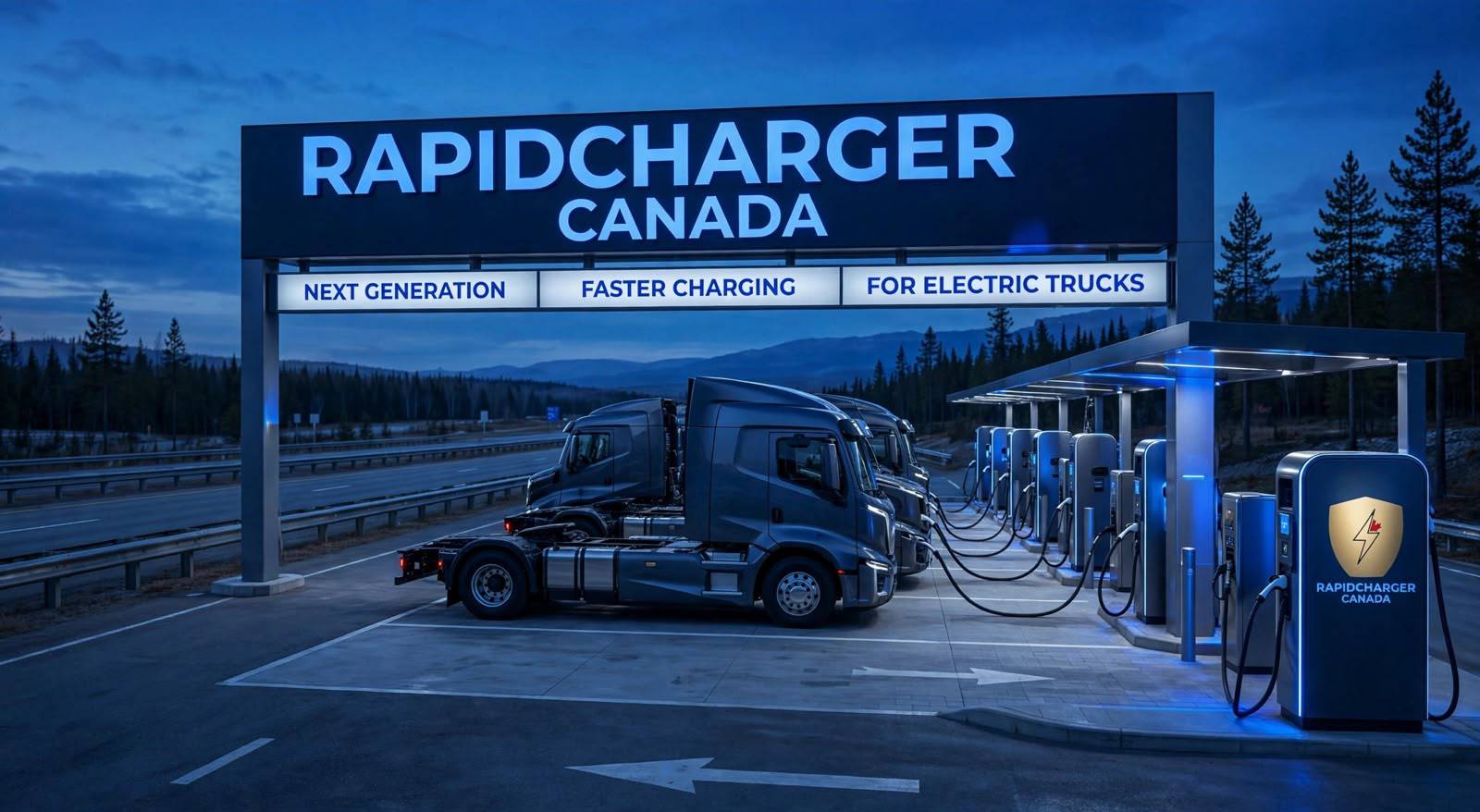
FLEET CHARGING FOR DIFFERENT OPERATIONS
01
DELIVERY FLEETS
Charging infrastructure for electric delivery vehicles operating from commercial facilities.
02
CORPORATE FLEETS
Charging for company vehicles and operational fleets.
03
ELECTRIC TRUCKS
Higher-power charging infrastructure for commercial transportation where site conditions support it.
04
ELECTRIC BUSES
Charging strategies for commercial and transportation bus operations.
05
LOGISTICS & DISTRIBUTION
Charging planned around routes, schedules and vehicle availability.
06
MUNICIPAL & COMMERCIAL FLEETS
Project-specific charging infrastructure for fleet electrification programs.
QUESTIONS BEFORE EQUIPMENT
A fleet project should first answer practical questions:
- How many vehicles require charging?
- What vehicles are being electrified?
- What are the daily routes?
- When do vehicles return to the facility?
- How long are charging windows?
- What charging power is required?
- What electrical capacity is available?
- Is utility service adequate?
- What happens during peak periods?
- How much future fleet growth should the site accommodate?
FROM FLEET NEEDS TO CHARGING PLAN
01
UNDERSTAND THE FLEET
Vehicle types, routes, mileage and operating patterns.
02
UNDERSTAND THE SCHEDULE
Charging windows and vehicle dwell time.
03
ASSESS THE POWER
Existing service, available capacity and potential utility upgrades.
04
PLAN THE SYSTEM
Charging power, number of ports, layout and load-management requirements.
05
ALLOW FOR GROWTH
Where appropriate, infrastructure can be considered in phases rather than sized only for today’s fleet.
WHERE FLEET CHARGING MAY FIT
Charging may be considered at:
- Distribution centres
- Warehouses
- Transportation depots
- Fleet yards
- Commercial parking facilities
- Bus facilities
- Industrial properties
Final equipment and infrastructure requirements are established after project-specific technical review.
THE RIGHT TECHNOLOGY FOR THE RIGHT PROJECT
RAPIDCHARGER does not promote a single charger manufacturer or one standard configuration for every property. Our approach is to understand the project first and then evaluate equipment and service providers that may fit the requirements.
EQUIPMENT EVALUATION
Depending on the project, considerations may include:
- Required charging power
- Number of charging ports
- Vehicle compatibility
- CCS1
- NACS / J3400
- Dynamic power sharing
- Electrical input requirements
- OCPP compatibility
- Network integration
- Payment options
- Weather suitability
- Certification for use in Canada (for example, a CSA or cUL mark)
- Warranty
- Service availability
- Replacement parts
- Expansion capability
PROJECT PARTNERS
A charging development may involve several independent professional organizations.
EQUIPMENT MANUFACTURERS
Supply charging equipment appropriate to the selected project design.
ENGINEERS
Develop and approve applicable engineering designs and technical requirements.
ELECTRICAL CONTRACTORS
Perform electrical installation and related work within their licensed scope.
CIVIL CONTRACTORS
Handle foundations, trenching, paving and other site-development work as applicable.
UTILITY / SERVICE PROVIDERS
Address electrical service, connection and infrastructure requirements.
NETWORK PROVIDERS
Provide charging-network and software services where selected.
PAYMENT PROVIDERS
Support customer transaction processing where applicable.
MAINTENANCE & SERVICE PROVIDERS
Provide technical support, preventive maintenance and field services according to contract.
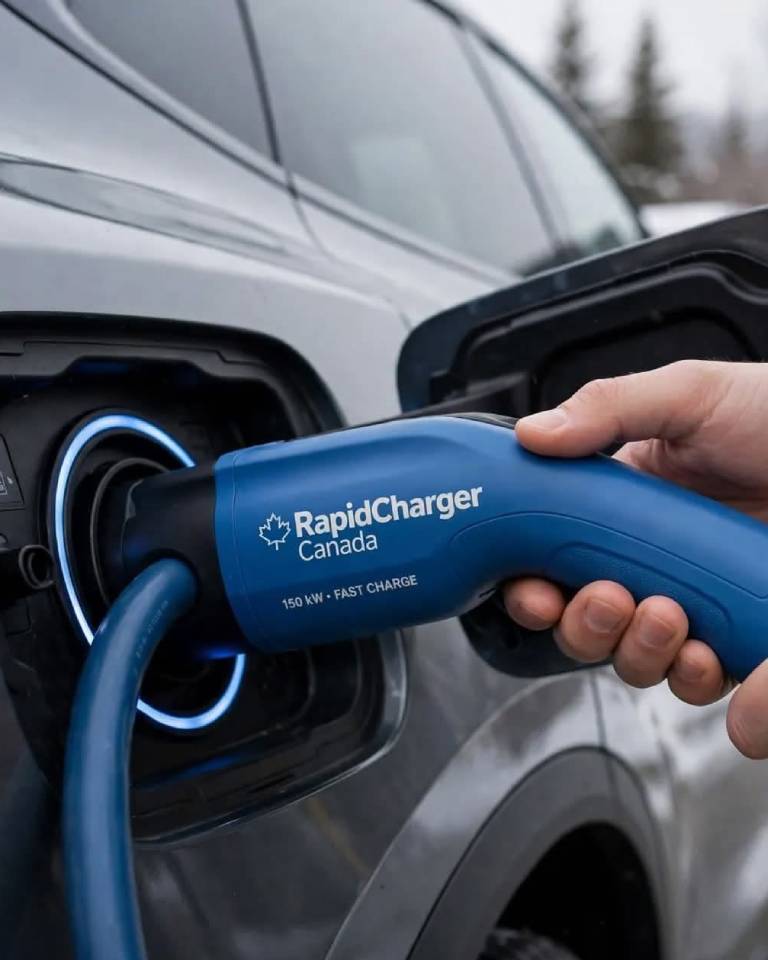
FROM PROJECT IDEA TO CHARGING LOCATION
- 01
SITE
Understand the property and intended use.
- 02
POWER
Review electrical capacity and utility requirements.
- 03
DESIGN
Develop the appropriate charging concept.
- 04
EQUIPMENT
Evaluate suitable charging technology.
- 05
ENGINEERING
Engage qualified professional engineering resources where required.
- 06
DEVELOPMENT
Coordinate property, utility, construction and other project requirements.
- 07
COMMISSIONING
Complete applicable testing and commissioning.
- 08
OPERATING SERVICES
Establish network, payment, maintenance and other services appropriate to the final project.
OUR ROLE
RAPIDCHARGER’s role may include project development, coordination, equipment sourcing, partner coordination and commercial planning.
We do not represent ourselves as the manufacturer, licensed electrical contractor, utility, engineering firm, payment processor or network technology provider unless separately qualified and authorized to perform that specific role.
THE DIGITAL SIDE OF EV CHARGING
Depending on the selected equipment and service providers, a project may incorporate network connectivity, station management, payment processing, customer access, reporting and technical support.
NETWORK SERVICES
A selected charging-network provider may offer functions such as:
- Station connectivity
- Charger status
- Session information
- Remote diagnostics
- Fault notifications
- Availability information
- Energy and utilization data
- Software or firmware functions where supported
- Reporting
CUSTOMER PAYMENT
Depending on the project and applicable requirements, payment arrangements may include:
- Credit or debit card
- Mobile or app-based payment
- Fleet accounts
- Session-based charges
- Time-based pricing
- Energy-based pricing where permitted and appropriately metered
- Other supported transaction methods
DRIVER ACCESS & VISIBILITY
Where supported by the selected network, charging locations may be made available through compatible:
- Charging applications
- EV directories
- Roaming networks
- Fleet platforms
- Other third-party services
OWNER INFORMATION
Depending on the platform, a station owner may have access to information such as:
- Charging sessions
- Energy delivered
- Utilization
- Transaction activity
- Revenue reporting
- Station status
- Maintenance events
- Performance information
SERVICE & MAINTENANCE
A charging project may include:
- Manufacturer warranty support
- Preventive maintenance
- Corrective service
- Replacement parts
- Field diagnostics
- Network support
- Software/firmware support
- Equipment lifecycle planning
A FLEXIBLE PARTNER MODEL
RAPIDCHARGER is developing its business around a practical principle. This allows each project to be structured around the actual equipment, property, electrical infrastructure, network, payment requirements and commercial model.
EV CHARGING FOR RESIDENTIAL PROPERTIES
Commercial and public charging are RAPIDCHARGER’s primary development focus.
Residential charging remains an additional service area for homeowners, condominium properties and multi-residential buildings.
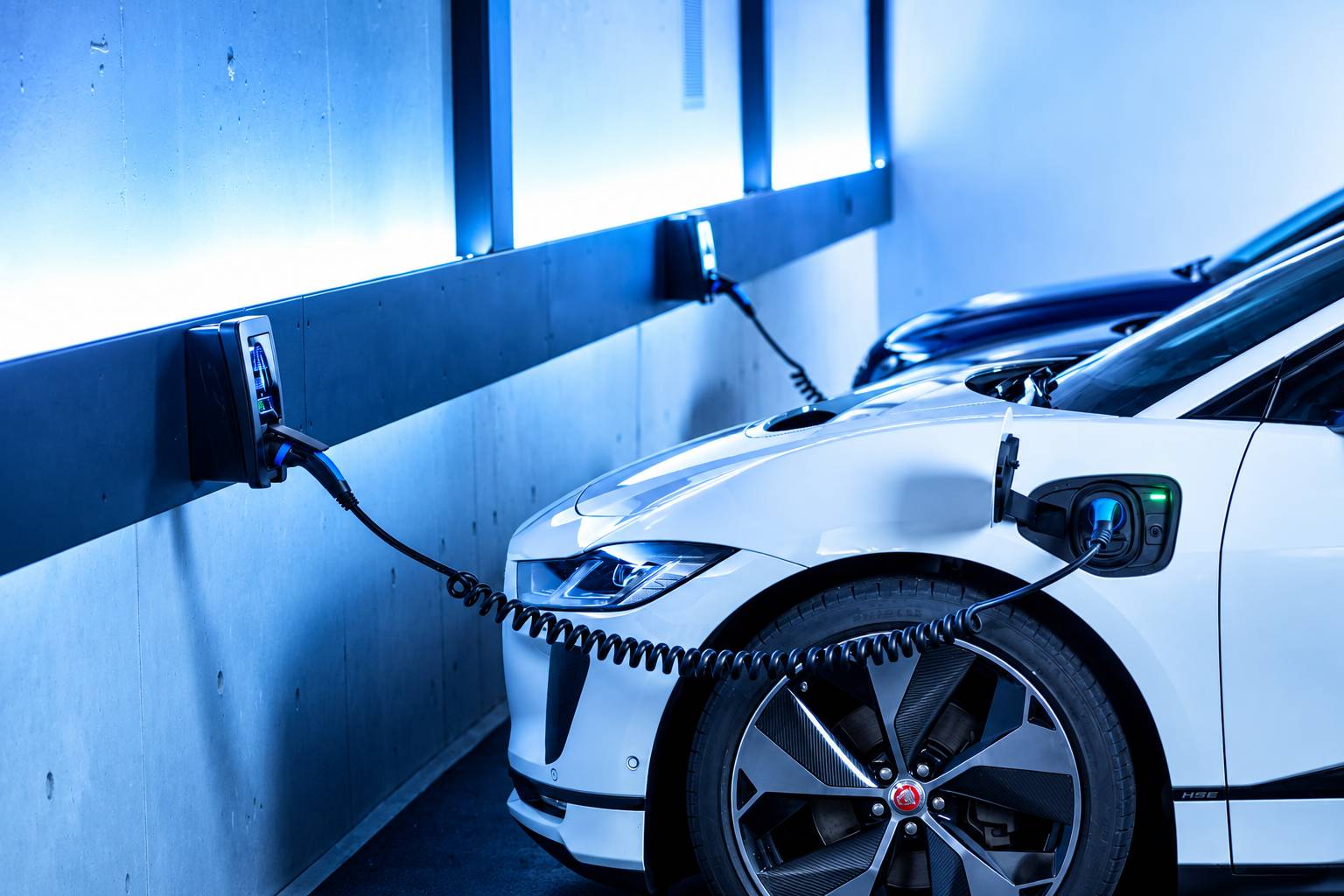
HOME LEVEL 2 CHARGING
For many EV owners, overnight Level 2 charging can be a practical residential solution.
A home charging project may require consideration of:
- Vehicle requirements
- Electrical panel capacity
- Charger location
- Distance from electrical equipment
- Indoor or outdoor installation
- Cable routing
- Circuit requirements
- Load management
- Weather exposure
- Future EV ownership
RAPIDCHARGER may assist with product selection and project coordination; electrical installation is performed by the qualified electrical contractor engaged for the project.
CONDO & MULTI-RESIDENTIAL CHARGING
Apartment and condominium properties introduce additional considerations.
A building-wide charging strategy may need to address:
- Shared electrical capacity
- Parking allocation
- Resident access
- Load management
- Billing arrangements
- Charger locations
- Building infrastructure
- Future expansion
NEW CONSTRUCTION
Early planning may allow charging infrastructure to be considered alongside:
- Electrical distribution
- Conduit pathways
- Parking design
- Charger locations
- Utility requirements
- Future expansion
EXISTING BUILDINGS
Existing properties may require assessment of:
- Current electrical service
- Distribution equipment
- Available capacity
- Parking configuration
- Charger locations
- Load-management opportunities
- Phased deployment options
BUILD EV CHARGING INFRASTRUCTURE WITH RAPIDCHARGER
EV charging infrastructure brings together four fundamental elements:
LOCATION
POWER
CAPITAL
TECHNOLOGY
technical, commercial and financial characteristics.
FOR PROPERTY OWNERS
A commercial or strategically located property may have potential for:
- Public DC fast charging
- Highway charging
- Commercial Level 2
- Fleet charging
- Destination charging
- Truck and bus charging
FOR INVESTORS & ENTREPRENEURS
RAPIDCHARGER is developing a potential project partnership / franchise-style model for a limited number of selected charging locations.
Depending on the final project structure, an investor or project partner may participate in a specific charging project, while RAPIDCHARGER may provide agreed development, coordination, brand, technology-sourcing or other services.
Ownership, financing, capital requirements, responsibilities, fees, royalties, operating arrangements and other commercial terms are determined separately for each project and documented through appropriate agreements.
WHAT WE REVIEW BEFORE A PROJECT PROCEEDS
Key factors are considered before moving forward with a potential charging project.
01
LOCATION
Is the site accessible and strategically positioned?
02
POWER
What electrical service and capacity are available?
03
DEMAND
Is there a reasonable basis to investigate charging demand?
04
CAPITAL
What level of investment may be required?
05
INFRASTRUCTURE
What transformer, switchgear, civil and electrical work may be necessary?
06
EQUIPMENT
Which charging technology may fit the site?
07
PROPERTY
What lease, ownership or site-control arrangement is available?
08
OPERATING COSTS
What ongoing electricity, network, insurance, maintenance and other expenses may apply?
09
REVENUE MODEL
What charging activity and commercial opportunities may exist?
10
EXPANSION
Could the location support additional infrastructure in the future?
UNDERSTANDING THE PROJECT COST STRUCTURE
Depending on the project, costs may include:
- Property or lease costs
- Utility connection
- Transformer
- Switchgear
- Charging equipment
- Civil construction
- Electrical installation
- Engineering
- Permits and approvals
- Network services
- Payment processing
- Insurance
- Maintenance
- Electricity
- Marketing
- Other operating expenses
Financial projections should be developed from site-specific assumptions
and appropriate due diligence.
revenue, financing approval or project profitability.
WHY WORK WITH RAPIDCHARGER?
01
PROJECT FOCUS
We look at the complete charging project rather than only the charger.
02
TECHNOLOGY FLEXIBILITY
We can evaluate equipment from appropriate manufacturers according to project requirements.
03
PARTNER COORDINATION
Specialized work can be assigned to qualified professional and service providers.
04
SCALABLE THINKING
Projects can be considered for current needs and potential future expansion.
05
ONTARIO-FIRST DEVELOPMENT
Our initial market focus is Ontario, with a long-term Canadian development objective.
RAPIDCHARGER CANADA
EV CHARGING INFRASTRUCTURE & CHARGING NETWORK
RAPIDCHARGER CANADA is an Ontario-based EV charging infrastructure company and a new venture under ITBD Group.
Our primary objective is to participate in the development of practical EV charging infrastructure, with particular emphasis on commercial, public and high-power charging applications.
We are building our initial business in Ontario while developing a long-term vision for broader Canadian participation.
BUILDING PRACTICAL EV CHARGING INFRASTRUCTURE
To help develop practical EV charging infrastructure by connecting suitable locations, charging technology and qualified project partners.
A CONNECTED EV CHARGING FUTURE
To participate in the development of an accessible, strategically located EV charging infrastructure network across Canada.
HOW WE APPROACH EVERY PROJECT
SITE FIRST
Understand the location before selecting equipment.
PROJECT-SPECIFIC
Develop solutions around the actual property, electrical and commercial requirements.
QUALIFIED PARTNERS
Use appropriately qualified professionals and specialized service providers for work requiring their expertise.
TECHNOLOGY-NEUTRAL
Evaluate equipment based on project requirements rather than assuming one manufacturer fits every location.
SCALABLE
Consider current demand together with reasonable future expansion.
TRANSPARENT
Separate RAPIDCHARGER’s role from the responsibilities of manufacturers, engineers, contractors, utilities and other service providers.
WHAT RAPIDCHARGER DOES
Depending on the project, our role may include:
- Site opportunity identification
- Project development
- Preliminary site assessment
- Charging strategy
- Equipment sourcing and evaluation
- Manufacturer coordination
- Engineering coordination
- Contractor coordination
- Utility coordination
- Project planning
- Network and payment provider coordination
- Commissioning coordination
- Commercial development
- Investor and property-partner coordination
WHAT WE DO NOT CLAIM
RAPIDCHARGER IS NOT A CHARGER MANUFACTURER.
We do not represent that we independently manufacture charging equipment, provide utility services, perform regulated electrical work, provide professional engineering services, process customer payments, operate a proprietary charging network or provide maintenance directly unless the relevant activity is separately established, contracted and legally authorized.
Where specialized services are required, the appropriate manufacturer, licensed contractor, professional engineer, network provider, payment provider or other qualified organization may be engaged.
This approach allows RAPIDCHARGER to remain focused on project development, coordination and commercial growth.
START WITH THE PROJECT
Whether you are:
A PROPERTY OWNER
with a commercial or highway-adjacent location.
A BUSINESS
considering EV charging for customers, employees or visitors.
A FLEET OPERATOR
planning vehicle electrification.
A DEVELOPER
integrating EV infrastructure into a new property.
AN INVESTOR / DEVELOPMENT PARTNER
interested in charging infrastructure opportunities.
We invite you to begin with a project discussion.
Tell us what you’re planning.
Start a project conversation with RAPIDCHARGER CANADA.
RAPIDCHARGER CANADA
EV Charging Infrastructure & Charging Network
Email mrahman@itbdg.com
Phone 1-647-707-3629
Location Ontario, Canada
INFORMATION & PROJECT NOTICE
Charging performance depends on the vehicle, charging equipment, electrical infrastructure, battery condition, site conditions and other factors.
Project costs, timelines, charging capacity, utilization, revenue potential, financing availability, operating expenses and commercial outcomes vary by location and project structure.
A website inquiry, consultation, preliminary assessment or project discussion does not constitute an offer, financing commitment, investment solicitation, franchise award, ownership commitment, revenue guarantee or promise that a project will proceed.
Any investment, franchise-style, ownership, lease, revenue-sharing, financing, royalty, service or development arrangement is subject to separate evaluation, due diligence, applicable law and definitive written agreements.
Equipment, engineering, electrical, construction, network, payment, insurance, maintenance and other third-party services are subject to the terms and capabilities of the respective providers.
Applicable permits, inspections, certifications, utility requirements and regulatory approvals must be addressed for each project before the relevant work or operation proceeds.
Funding and incentive programs, where applicable, are subject to current program terms, eligibility requirements, availability and approval.
Nothing on this website should be interpreted as a guarantee of technical feasibility, regulatory approval, project economics, investment performance or project completion.
Forward-looking information: This website describes plans, intentions and potential projects. Actual results may differ materially, and RAPIDCHARGER has no obligation to update this information except as required by law.
Privacy: Information submitted through this website is used only to respond to your inquiry and manage our relationship with you, in accordance with applicable Canadian privacy law. To access or correct your information, contact mrahman@itbdg.com. [Link to full Privacy Policy]
Electronic messages: RAPIDCHARGER sends promotional emails only with your consent, and every message includes a way to unsubscribe.
Accessibility: We aim to make this website accessible to everyone. If any content is difficult to use, contact us and we will provide it in another format.